Deep in the forest east of Silverton, Oregon, a creek drops out of the Cascade foothills into a curved basalt amphitheater that most people never see. It’s a place I truly wish I could visit more often, Abiqua Falls. The cliffs wrap nearly all the way around the pool in a ring of columnar basalt, so precise it feels built rather than found. The water falls from ninety-two feet into that rock. The light down there is green and wet and cold. It feels like a room carved out of the forest, because that is exactly what it is.
A quick note before we go further: our distillery takes its name from Abiqua Creek, the stream the falls feeds into. Creek and falls share a watershed, not a brand. The creek runs behind the building where we work. The falls are upstream, and worth the walk.
From there, the creek keeps going. It drops out of the volcanic rock of the Cascades, slides through second-growth Douglas fir and mossed-over boulders, and eventually levels out onto the long flat of the Willamette Valley. It passes through the agricultural land east of Silverton. It passes behind where we work. And then it keeps going, through the Pudding River, the Willamette, the Columbia, and eventually the Pacific.
That whole route starts at the falls.
Getting there
The falls are a destination more than a drive-up. The trailhead sits at the end of Crooked Finger Road, a gravel logging route that climbs into the forest southeast of Scotts Mills. The last stretch is rough enough that most people park where they can and walk the rest on foot.
From the gate, it is a little over a mile in. The trail drops down into the canyon, with a short scramble over loose rocks near the end. Spring and early summer are best, when the creek is full. In wet weather the approach gets slick. In late summer the fall thins out.
If you are planning a visit, check conditions first. Oregon Hikers has detailed directions and recent trip reports from people who hike it regularly. They are a more reliable source than anything we could put on a distillery’s website.
The basics:
- Distance: just over a mile each way from the gate
- Drop: 92 feet
- Best season: spring through early summer
- Terrain: dirt path into a canyon, loose rock near the falls
- Bring: boots, water, something warm for the bottom
Common questions about Abiqua Falls
What city is Abiqua Falls in?
Abiqua Falls sits in unincorporated Marion County, Oregon, in the forested foothills of the Cascades. The nearest town is Scotts Mills, about seven miles northeast of Silverton. Mailing addresses in the area use Scotts Mills or Silverton depending on the carrier. The falls are not inside a city, park, or official forest boundary. They sit on forested land between those things.
Where is Abiqua Falls, exactly?
The falls are at approximately 44.9264° N, 122.5677° W, at the head of Abiqua Creek where it drops out of the Cascade foothills. From Silverton, head north on Highway 213 toward Scotts Mills, then follow Crooked Finger Road east into the forest. The trailhead is at the end of Crooked Finger Road, past the Crooked Finger OHV area. The last few miles are rough gravel. See the map above.
Is Abiqua Falls a hard hike?
Yes. AllTrails rates the short Abiqua Falls Trail as challenging, with a 4.6-star average from over two thousand reviews. The shorter version is about 0.8 miles out-and-back if you have the clearance to drive all the way up. If your vehicle does not, park lower and the route from the Crooked Finger OHV area is 3.9 miles with 928 feet of elevation gain, also rated hard. The final descent into the canyon is a steep scramble on loose rock with a fixed rope for the last stretch. Sturdy boots, not sneakers.
How long does it take to hike Abiqua Falls?
Plan on one to four hours round trip, depending on where you park. From the upper parking area at the end of Crooked Finger Road, the hike is about 0.8 miles out-and-back and takes one to two hours with time at the base of the falls. If you park lower at the Crooked Finger OHV area because your vehicle cannot handle the rough upper road, you are looking at 3.9 miles round trip with 928 feet of elevation gain, which takes most people three to four hours. Most visitors also underestimate how long they will linger at the bottom. The amphitheater is the kind of place you sit down in and forget the walk back is still waiting.
What road leads to Abiqua Falls?
Crooked Finger Road, a gravel logging route that climbs from Scotts Mills into the Cascade foothills. It is passable for most vehicles in dry conditions, but the upper stretches are rough, narrow, and unsigned. Low-clearance sedans should park at the Crooked Finger OHV area and walk the rest. In wet weather the road gets muddy and the walk gets longer. Check conditions before committing to the drive.
Where is the Abiqua Falls trailhead?
At the end of Crooked Finger Road, at the top of the canyon. There is no visitor center, no sign, no services. The trailhead is on private land, and public access has historically been granted informally by the landowner. Check current conditions with Oregon Hikers before you go.
Will Abiqua Falls still be open to the public after it was sold?
As of April 2026, yes. Access has not been closed during the sale process. Here is the longer version.
For over a century, Abiqua Falls and the surrounding parcel were stewarded first by Mount Angel Abbey, a few miles north of us in Mount Angel, which acquired the property in 1908. In 2002 the Abbey transferred the parcel to the Abbey Foundation of Oregon, a supporting nonprofit. The land was privately owned but informally open to hikers who treated the place with respect. In February 2026, the Abbey Foundation listed the property for sale on Redfin without a listed price. A bipartisan group of Oregon state lawmakers responded quickly and approved roughly $2.1 million in public funds to keep the falls in public hands, per KPTV’s March 2026 reporting.
Plans for the site after the sale closes are still being worked out. The prevailing idea, per American Whitewater’s write-up, is to keep the falls largely as they are rather than develop the area into a conventional state park. Heavy traffic would damage the basalt amphitheater and the creek below, which is the part of Abiqua Creek we think about most.
As always, check the most recent trip reports on Oregon Hikers before you drive out. This page is dated. Trip reports are not.
A note on safety
The final descent is a scramble on slick basalt with a rope for the last section. The rock is wet most of the year. The pool at the bottom is deep and very cold. Do not climb near the lip of the falls. Do not hike alone if the weather is uncertain. Do not underestimate the walk back up after a long afternoon down below. There have been serious injuries here over the years. The list above is not hypothetical. This is beautiful country, and it is unforgiving country, and both of those things are true at once.
The creek
The creek is what connects us to the place. Not the waterfall. Not the hike. The creek.
Abiqua Creek runs west from the falls through the forest, out of the volcanic country, and onto the valley floor. It flows behind the property where we distill, blend, and bottle our spirits. Same water that started at the falls that morning, moving downhill through different terrain, doing what creeks do.
We share a watershed with the falls. That is the connection. Small, specific, and true.
The water, and why we care
The Cascade foothills east of Silverton are a specific kind of geology. Snowmelt and spring water filter through layer after layer of volcanic basalt before they surface in the valley floor. That filtration is slow and mineral, and it gives Oregon water a character that people who make wine and beer and spirits in this part of the world talk about with the kind of reverence water usually does not deserve.
We are not going to tell you that Abiqua Creek is literally the water we put in the bottle. What we will tell you is that the creek is a few steps from where we work, and the landscape it runs through is the landscape that shaped us. The Willamette Valley has a quiet confidence to its food and drink that comes from not needing to shout. The water is part of that. The forest is part of that. We try to keep the same tone.
Why the name
We did not name the distillery after the waterfall. We named it after the creek.
The difference matters. A waterfall is a destination. A creek is a place you live near. We took our name from the thing that runs behind us every day, in the land where we work, in the valley we come from. The falls are upstream. The creek is where we are.
It was the honest choice that was considered when building Abiqua Spirit Distillery. Plenty of distilleries name themselves after places they will never set foot in. Ours is in plain view, just outside the window.
The bottles
We release three spirits. Each one is distilled or blended, bottled, labeled, and packed by hand, a batch at a time, in the building the creek runs behind. No automated line. No shortcut steps. We hold every bottle a few minutes before you do.
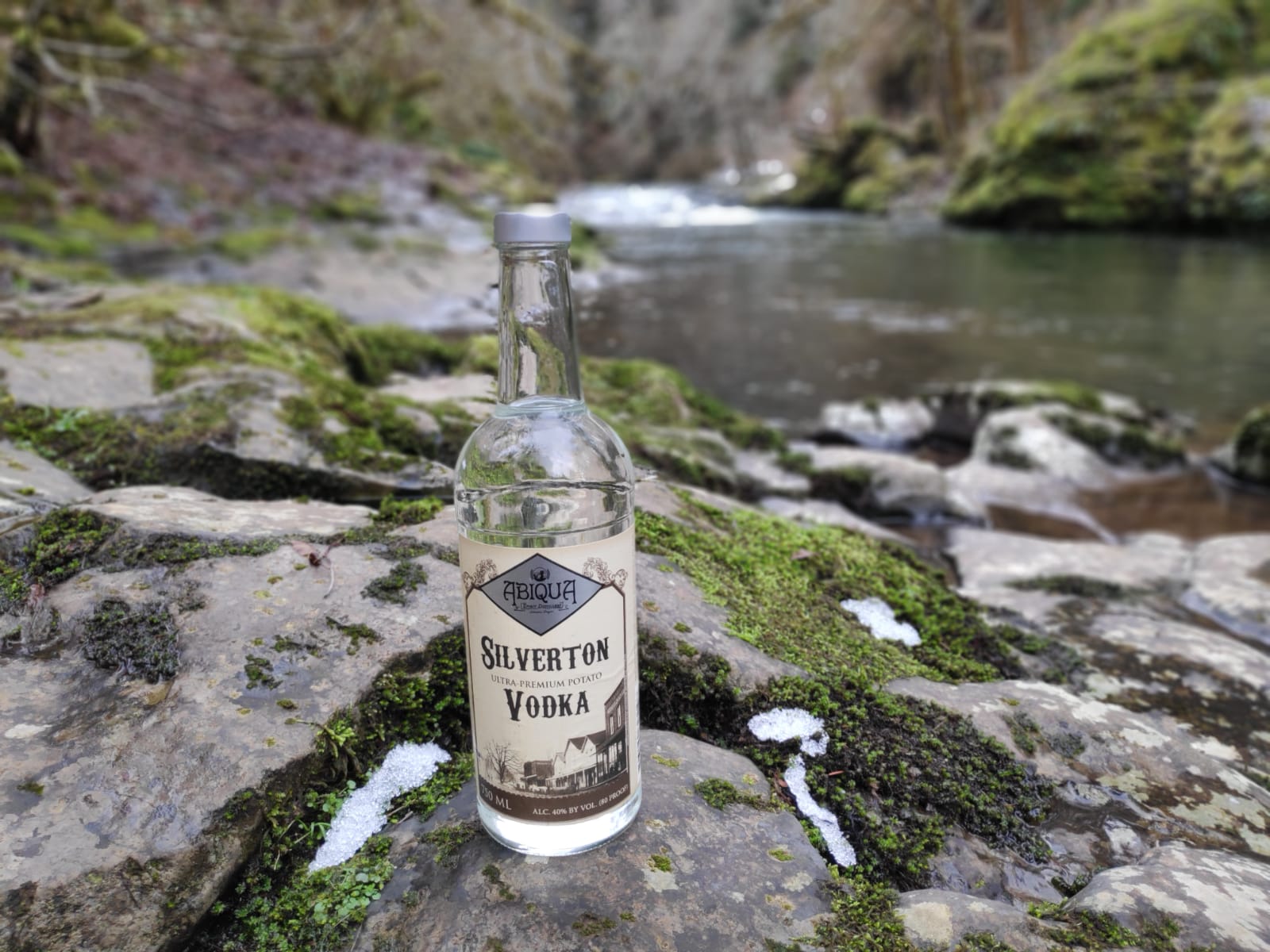
Silverton Vodka is an ultra-premium potato vodka. Clean and smooth, with a long creamy finish that sneaks up on the palate. It took the American Distilling Institute’s Gold Medal in 2019 and earned Silver at the San Francisco World Spirits Competition. For a lot of people, it is the bottle they meet us through. If you have not tried it yet, this is where we would tell you to start.
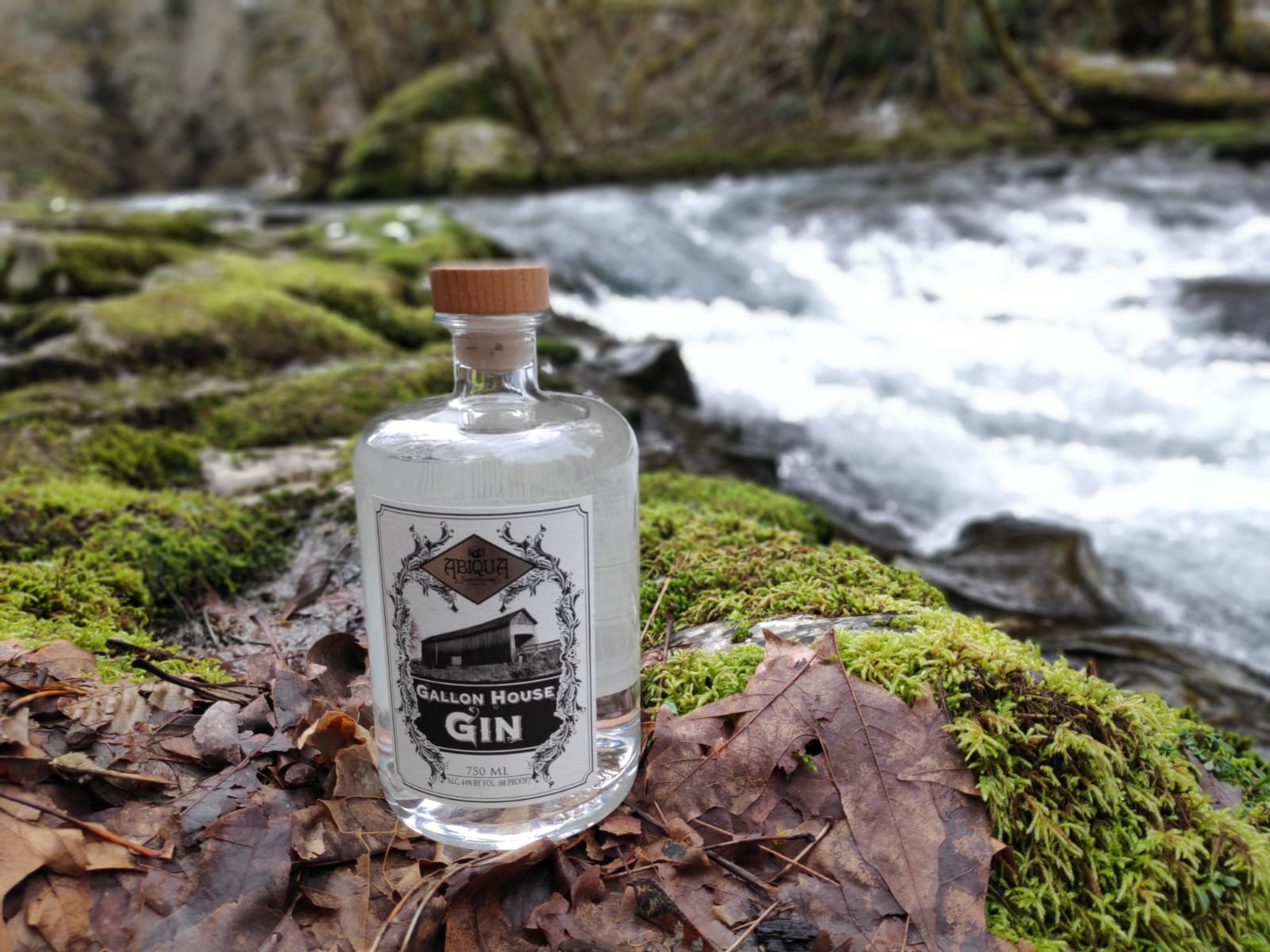
Gallon House Gin is juniper-forward with rose, coriander, citrus, and a touch of cucumber. Named for the covered bridge a few miles up the road, where locals traded bootleg moonshine during Prohibition, it is a gin built for Pacific Northwest cocktails and the people who drink them. Silver at the San Francisco World Spirits Competition.
Üla Orange Liqueur is our newest release. Warm, bright, and built for the cocktails that take orange liqueur seriously. It is the liqueur we write recipes around, not a substitute for something else. Silver at the San Francisco World Spirits Competition.
All three are carried at Oregon liquor stores statewide.
What to drink when you get back
After a cold hike, the first sip matters. We have thought about this, and our honest answer is it depends on where you end up.
If you pull into Silverton before dinner, make a Gimlet. Two ounces of Gallon House Gin, three quarters of an ounce of fresh lime juice, a half ounce of simple syrup, shaken cold and strained up. You just walked two miles over loose rock and cold water; a bright, sharp drink is the corrective. The gin’s botanicals read like aromatherapy when you still have the forest in your hair.
If it is late and you are past the making-drinks phase, Silverton Vodka on a rock. That is the whole recipe. Clean, creamy, and the kind of thing that makes the drive home quieter.
If you have a second guest with you, pour a small measure of Üla Orange Liqueur over ice with an orange twist. It is heavier than vodka and cuts cold weather like a match. Two ounces, no more, taken slow.
Any of these work. Pick the one that fits the weather.
If you go
We do not have a public tasting room. We tried to get a tasting room there but were turned down due to zoning. We respect the decision actually and honestly, we would rather meet you at the liquor store. That said, the beautiful distillery that was built is consigned to a working space, and cannot be a destination. If you are looking for the Abiqua experience, hike to the falls, and find a bottle on your way back through town at Silverton Liquor.
Outside of Silverton, our spirits are carried at Oregon liquor stores statewide. Use Oregon Liquor Search to locate a bottle near you.
Sources
- Oregon Hikers Field Guide, Abiqua Falls Hike, for trail directions, distance, and seasonal notes.
- Wikipedia, Abiqua Creek, for watershed and geography.
- Wikipedia, Silverton, Oregon, for local context.
- Wikipedia, Willamette Valley, for regional geography.
About the author
Adam Messick is the founder of Abiqua Spirit Distillery in Silverton, Oregon, with ten years in the craft spirits industry. With help from family and friends, he handles the day-to-day work of distilling, blending, bottling, and labeling every release of Silverton Vodka, Gallon House Gin, and Üla Orange Liqueur. Every bottle is filled by hand. Silverton Vodka received the American Distilling Institute’s Gold Medal in 2019. Silverton Vodka, Gallon House Gin, and Üla Orange Liqueur have each won Silver at the San Francisco World Spirits Competition. Photos in this piece by Cody St John, who walked them up to the creek.