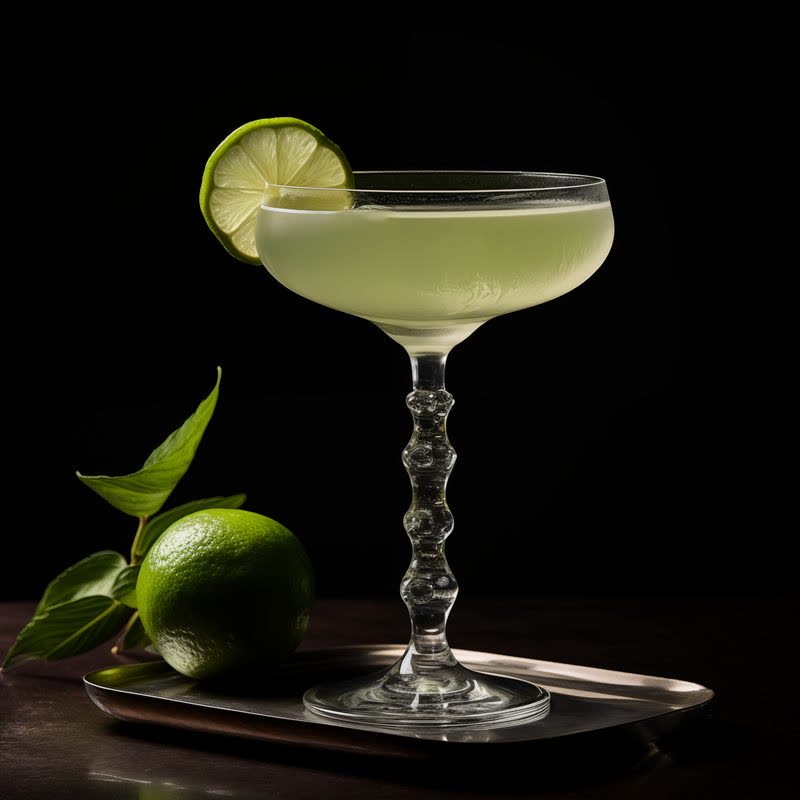
The Gimlet is two ingredients and a cold glass, which is exactly why people keep arguing about it. Gin and lime. Every part of that statement is contested. Which gin. What kind of lime. How much of each. Whether the lime should be fresh or preserved in a bottle of sweet cordial. A drink with this much room for disagreement has to be worth understanding.
A drink that started as medicine
The Gimlet came out of the British Royal Navy in the 1800s. Scurvy was a serious and constant threat on long voyages, and the British Admiralty had known since the 1750s that citrus juice prevented and cured it. The Royal Navy began issuing lemon juice as a daily ration in 1795 after the work of James Lind, the Scottish physician whose experiments on HMS Salisbury in 1747 are often called the first controlled clinical trial in history. By the early 1800s, lime had replaced lemon as the citrus of choice for the Navy, partly because West Indian limes were easier to source and preserve. The word “limey” as slang for a British sailor dates from this period.
Getting sailors to drink their daily lime ration was another matter. Warm, preserved lime juice is not a pleasant thing to drink straight. The fix, according to the best-known story, came from Rear-Admiral Sir Thomas Gimlette (1857–1943), a Royal Navy surgeon who began cutting officers’ lime rations with gin to make the medicine go down. The men drank it, the scurvy stayed off, and a cocktail was born — or so the story goes. Gimlette was only ten years old in 1867, when Rose’s lime cordial was patented, so the connection is more folklore than documented fact.
The name may also come from the gimlet, a small hand-drill with a sharp spiral bit. Either origin fits the drink. The Gimlet is sharp, precise, goes in cleanly, and if you drink enough of them, does approximately what the tool does.
The cordial that made it possible
In 1867, the same year the British Merchant Shipping Act made lime juice rations mandatory on all British merchant vessels for voyages over ten days, a Scottish entrepreneur named Lauchlin Rose patented the first commercial non-alcoholic lime juice preservative. Rose’s Lime Juice Cordial let sailors carry and store lime juice without it spoiling, and it made a sweetened lime product available to the civilian world. For most of the 20th century, a Gimlet was made with gin and Rose’s. Full stop.
The Long Goodbye
The Gimlet became a literary drink when Raymond Chandler’s detective Philip Marlowe ordered one in The Long Goodbye, published in 1953. Terry Lennox, Marlowe’s doomed acquaintance, sets the rule:
“A real Gimlet is half gin and half Rose’s Lime Juice and nothing else. It beats martinis hollow.”
That line did more for the Gimlet’s reputation than a century of naval history. Chandler wrote the drink as a kind of shorthand for a particular type of man: reserved, a little world-weary, suspicious of fuss. For decades afterward, a Gimlet in fiction meant character. It still does.
Fresh or Rose’s
Somewhere between the 1980s and the 2000s, bartenders rediscovered fresh lime juice, and the Gimlet entered its modern contested era. The fresh-lime Gimlet (gin, fresh lime juice, simple syrup) is brighter, sharper, and lets the gin lead. The Rose’s Gimlet (gin and Rose’s, roughly equal parts) is sweeter, rounder, slightly artificial in a way that works, and genuinely different.
Neither is wrong. They are answers to different questions. A Rose’s Gimlet tastes like 1953 and wants to be nursed slowly. A fresh-lime Gimlet tastes like a well-made sour and wants to be drunk cold and fast. The argument over which one is the “real” Gimlet has no clean answer because both versions have long histories and loyal drinkers.
We default to the fresh version because we think it lets the gin show, and that is what Gallon House Gin is built for.
What the drink actually is
A Gimlet is a member of the sour family, the oldest and largest category of mixed drinks. A sour is a spirit, a citrus, and a sweetener, balanced for a clean finish. The Daiquiri is the same shape with rum. The Whiskey Sour and the Margarita and the Sidecar are all on the same chassis. Understanding the Gimlet as a sour tells you what makes one good: the ratio of spirit to citrus to sweetness, balanced to let the spirit come through.
Making one well
Three things matter.
The gin has to have character. A flat, neutral gin makes a Gimlet that tastes like cold sweetened lime water. Gallon House Gin is juniper-led, with rose, coriander, and a touch of cucumber, and its finish is long enough to carry the drink without being overwhelmed by the lime. Cocktail historians have long described the Gimlet as a gin delivery vehicle, and a gin with something to deliver is the whole game.
The lime has to be fresh or it has to be Rose’s. Bottled lime juice from the grocery store is flat and slightly sulfurous and should not be used. If you want the classic Chandler version, use real Rose’s. If you want the modern version, use fresh lime and simple syrup so you can control the sweetness.
The drink has to be very cold. Shaken or stirred is a personal call. Shaking aerates and dilutes slightly more, which the fresh version can absorb. Stirring gives you a silkier, more concentrated drink that some drinkers prefer. Chill the glass. Strain into a coupe. Garnish with a thin lime wheel or a lime twist.
Variations worth knowing
The Bermuda Gimlet adds a splash of elderflower liqueur for a floral top note.
The Salted Gimlet finishes with a few grains of flaky sea salt, which pulls the lime forward and makes the drink taste brighter than it is.
The Vodka Gimlet swaps gin for vodka. Some drinkers consider this heresy. Some consider it a perfectly fine drink. Both are correct.
A Cucumber Gimlet muddles a few thin cucumber slices before shaking. With Gallon House Gin’s existing cucumber note, it is particularly good.
Worth drinking again
A proper Gimlet is a serious drink disguised as a simple one. Two ingredients, a cold glass, and the particular honesty that comes from a drink with nothing to hide behind. Chandler had it right: it beats martinis hollow, when it is made well.
A cousin of mine on the East Coast was the one who made me order my first Gimlet. She also handed me a copy of The Long Goodbye not long after. I ended up with a bottle of Rose’s lime in the cupboard for the next several years because of her.
The recipe
2 oz Gallon House Gin ¾ oz fresh lime juice ½ oz simple syrup
Shake with ice until very cold. Strain into a chilled coupe or cocktail glass. Garnish with a thin lime wheel.
Sources
- Raymond Chandler, The Long Goodbye (Houghton Mifflin, 1953).
- David Wondrich, Imbibe! (Perigee, 2007), for cocktail family taxonomy.
- James Lind, A Treatise of the Scurvy (1753), on the origin of citrus rations in the Royal Navy.
- The Merchant Shipping Act of 1867, on British commercial lime-juice requirements.
- Rose’s Lime Juice Cordial, patented by Lauchlin Rose, 1867.
- Difford’s Guide entry on the Gimlet.
About the author
Adam Messick is the founder of Abiqua Spirit Distillery in Silverton, Oregon, with ten years in the craft spirits industry. With help from family and friends, he handles the day-to-day work of blending, bottling, and labeling every release of Silverton Vodka, Gallon House Gin, and Üla Orange Liqueur. Silverton Vodka received the American Distilling Institute’s Gold Medal in 2019. Silverton Vodka, Gallon House Gin, and Üla Orange Liqueur have each won Silver at the San Francisco World Spirits Competition.
Abiqua Spirit Distillery is a small-batch spirits company producing finely crafted potato vodka, gin, and orange liqueur from Silverton, Oregon. Contact: info@abiquaspiritdistillery.com or (503) 837-9869.